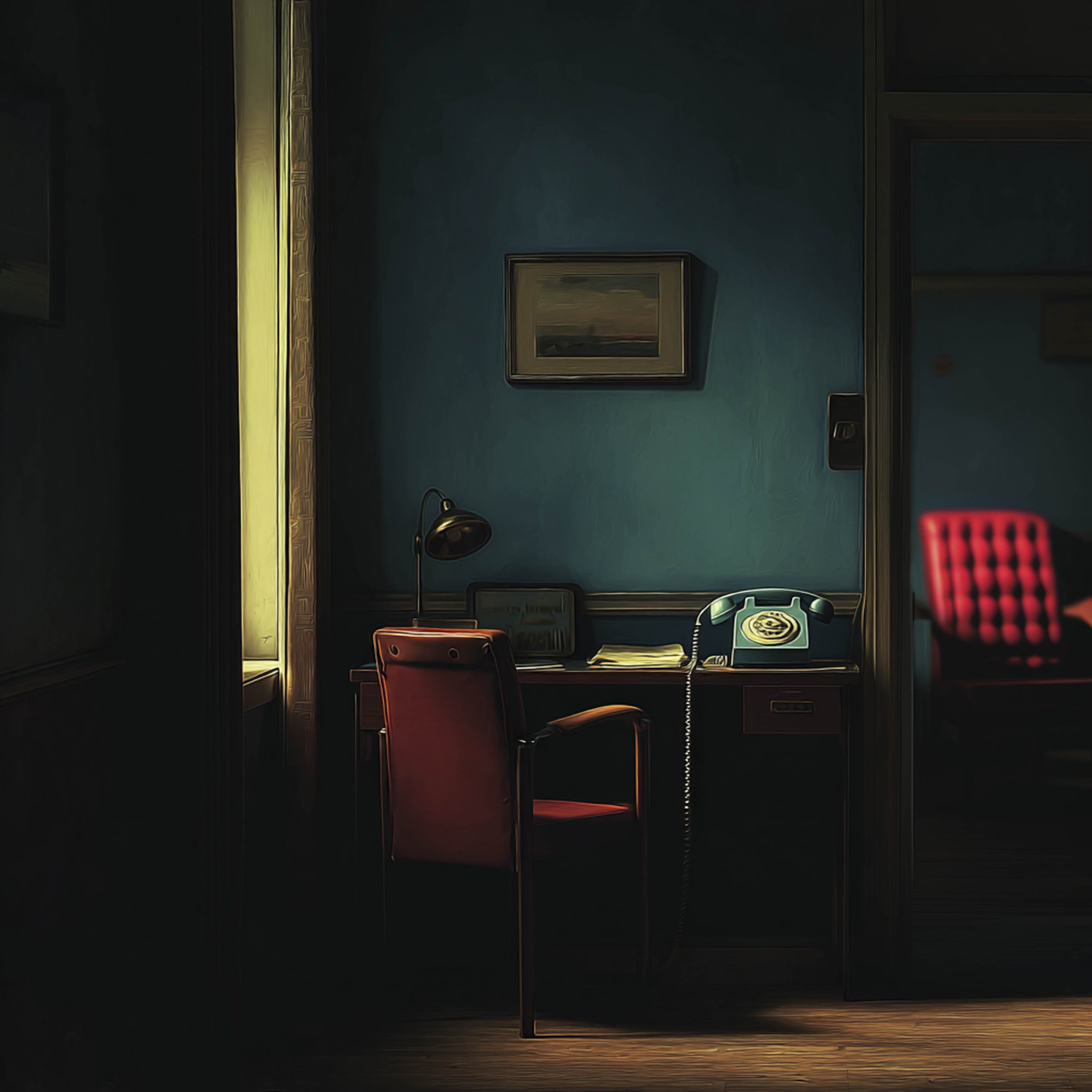
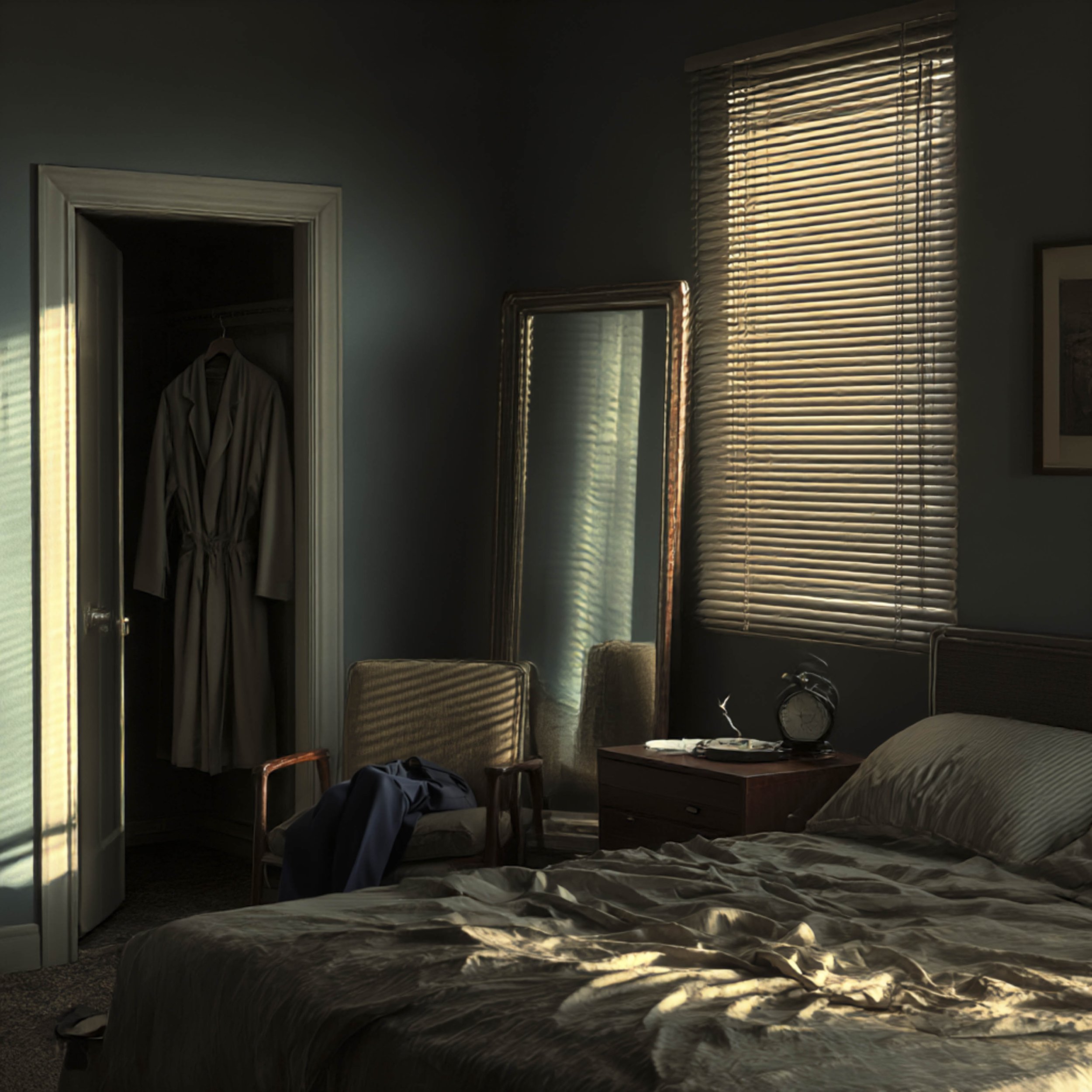
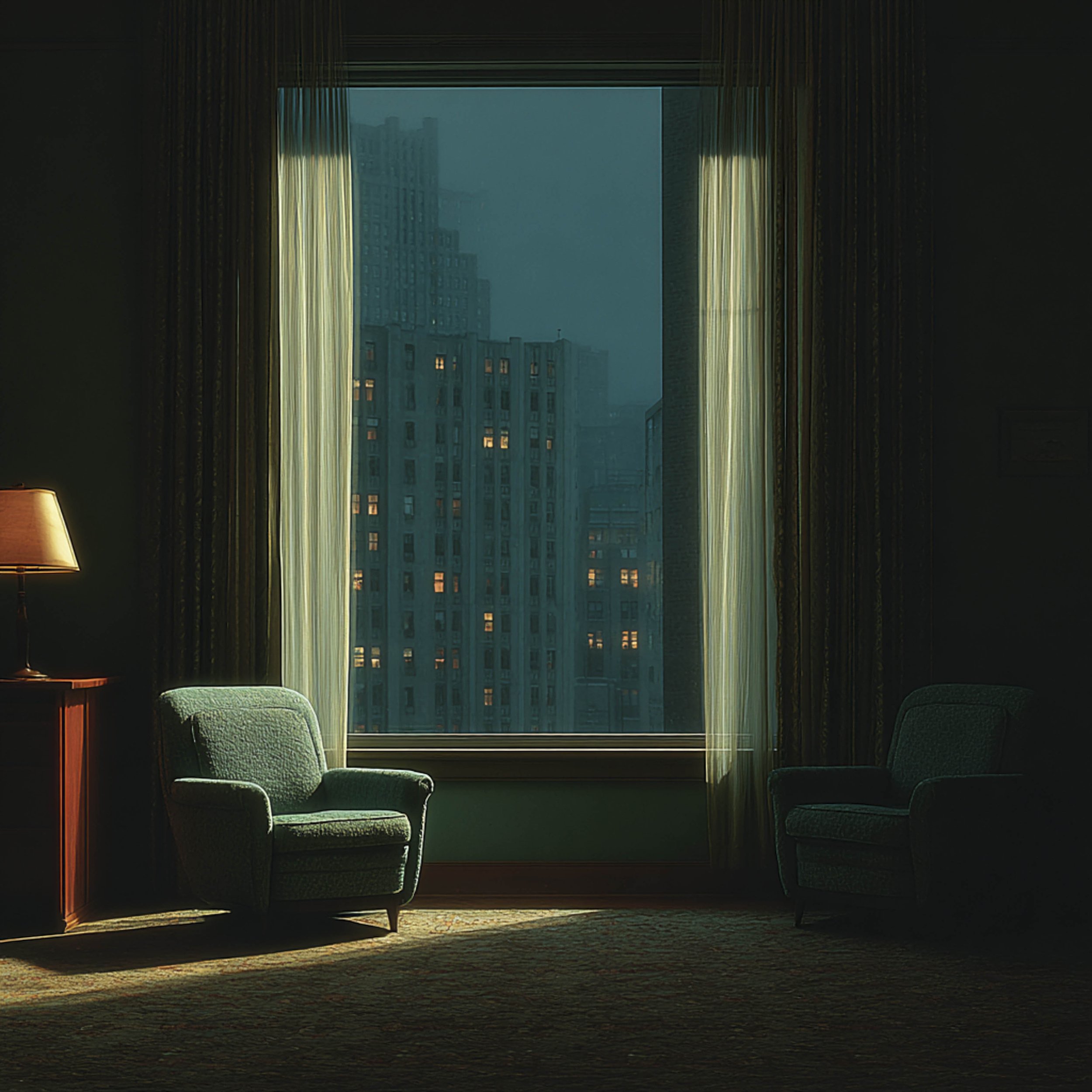
Hopper Mystique explores what Hopper's placid, composed female figures conceal — and sets them against women caught in the aftermath of rupture, asking what lies beneath the stillness.
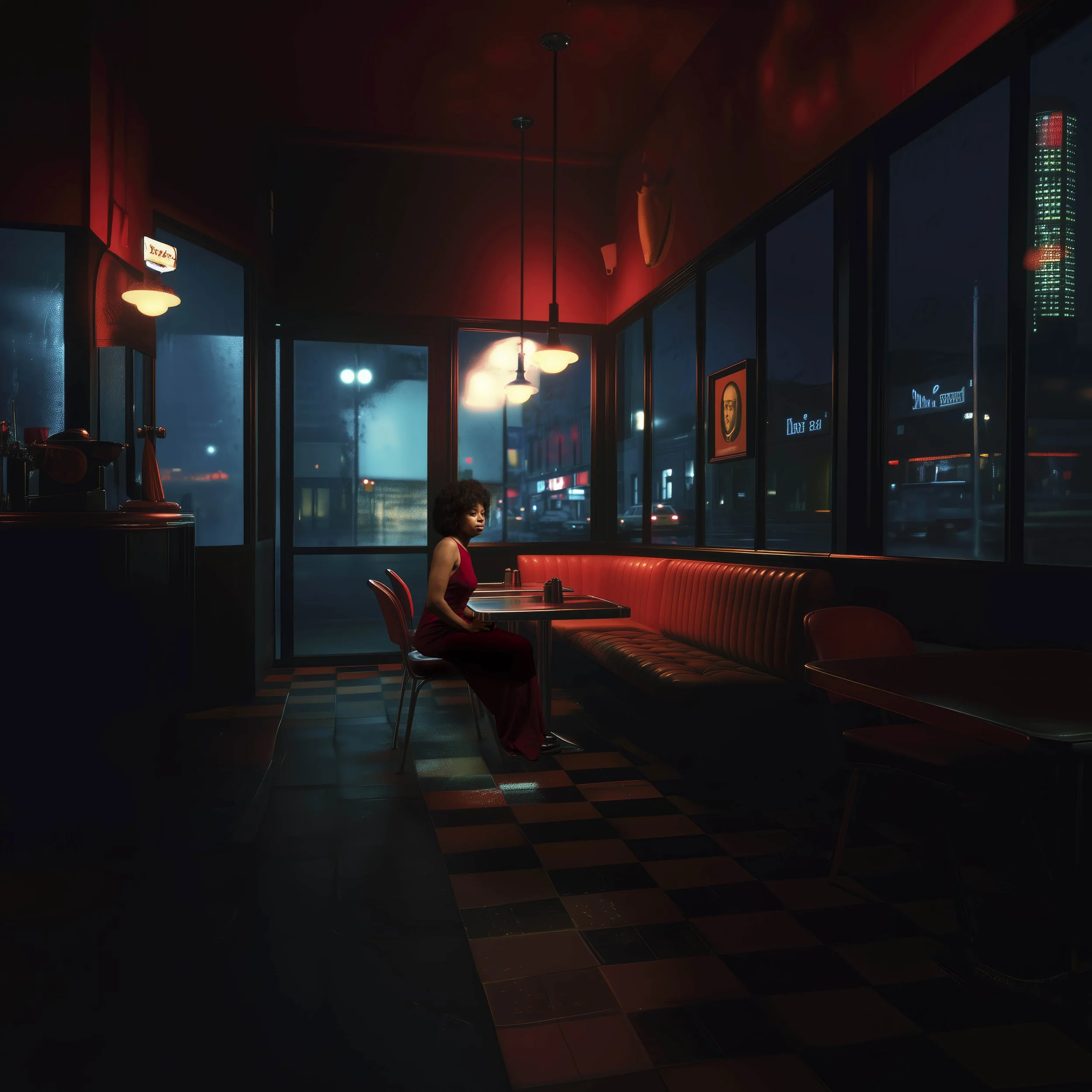
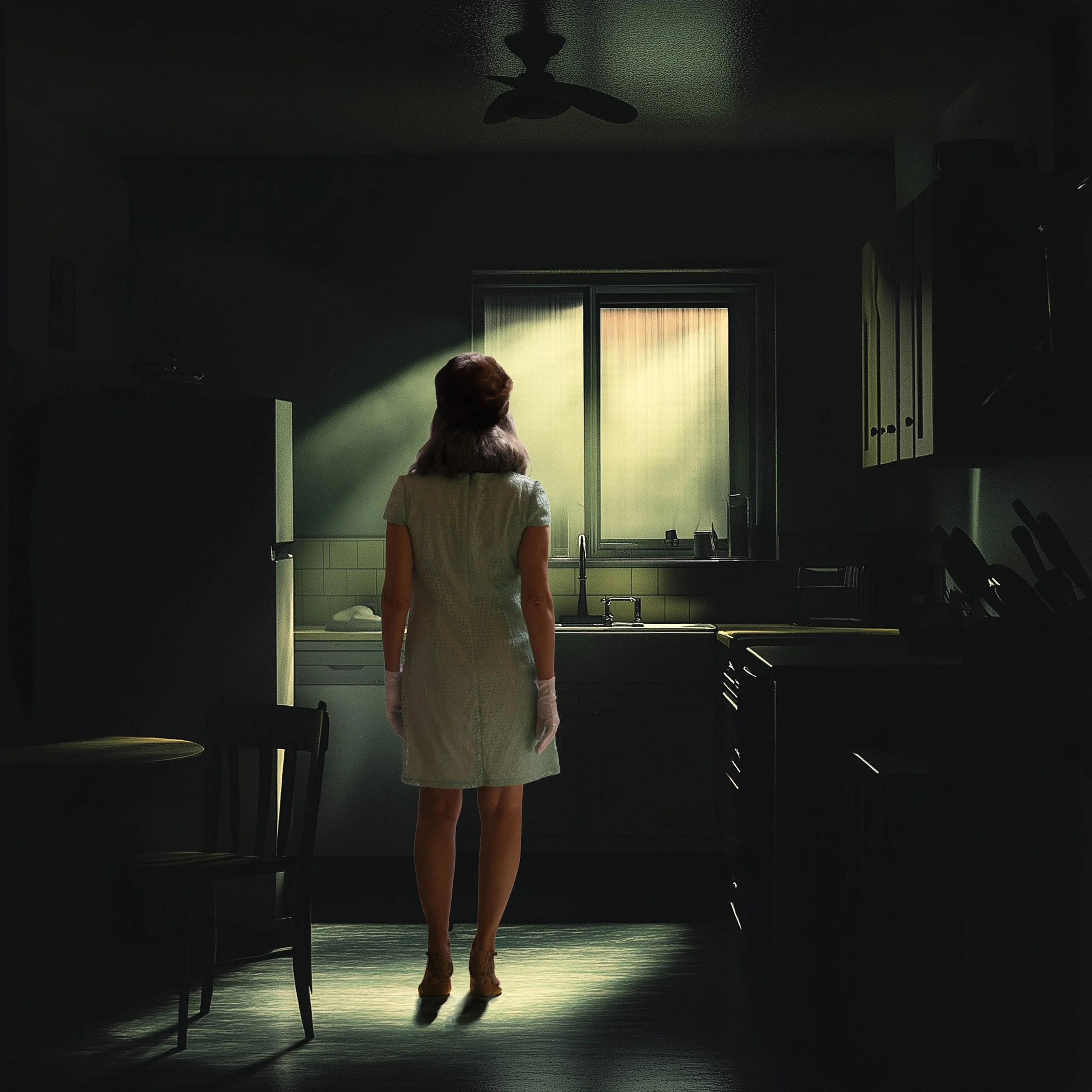
Edward Hopper painted her rooms. The kitchen. The office. The window with the light that went nowhere. And in those rooms, he placed her — placid, still, gazing at nothing in particular. Beautiful and unreachable. His women exist in a profound loneliness, figures absorbed into the geometry of the room itself, as if the architecture had swallowed them whole.
He saw the stillness and made it art. What he didn’t paint — what he perhaps couldn’t see — was what was moving underneath.
This work begins where Hopper left off.
The feminine mystique was a myth so total, so seamlessly woven into the fabric of ordinary life, that the woman inside it had no name for her own unease. She set the table. She answered the phone. She stood in the garage and felt something she couldn’t say out loud.
And then something cracked open.
Hopper Mystique takes his rooms — the kitchen, the office, the garage — and finds her there in the aftermath of rupture. She is still alone. But the room has changed because she has changed. She lights a Virginia Slims. She pours herself a cocktail. She stands differently in the space that was supposed to contain her.
This is not a tidy liberation. It is something rawer and more honest — a woman in the act of discovering her own power, experimenting with it, surprised by it. The same rooms. An entirely different woman.
Hopper observed the cage. I create moments when she realizes the doors have opened.